
In 2026, a viral TikTok moment can change an artist’s career overnight. A 15-second snippet, dance challenge, or sped-up remix can push an unknown song into global conversations within days. But while TikTok has become one of the most powerful discovery tools in modern music, virality does not always translate into long-term success or major income.
The reality is more complicated.
Today, TikTok sits at the center of music promotion. Labels actively monitor trends on the platform, artists tease unreleased songs hoping for viral traction, and fans increasingly discover music through short-form videos before hearing full tracks on streaming platforms.
Why TikTok Has Become So Important for Music Discovery
According to TikTok and Luminate’s music report, 84% of songs that entered the Billboard Global 200 first gained traction on TikTok. The platform’s “Add to Music App” feature has also reportedly generated billions of track saves, helping users instantly transfer songs to Spotify and Apple Music libraries.
For artists, that level of exposure is valuable. But exposure alone does not guarantee sustainability.
One of the biggest misconceptions about TikTok virality is the idea that millions of views automatically mean millions of dollars. In reality, TikTok pays significantly less than major streaming platforms when it comes to music usage.
Unlike Spotify or Apple Music, where royalties are based on streams, TikTok’s royalty structure is mostly tied to how many videos are created using a song. Reports estimate that artists earn roughly $0.03 per video creation featuring their music. That means 1,000 videos using a song may generate around $30, while one million uses could bring in approximately $30,000.
The catch is that view counts do not directly affect those payouts. A single viral video with 10 million views may earn less than hundreds of smaller videos using the same sound.
How Artists Actually Make Money From Viral TikTok Songs
The real financial value of TikTok often comes indirectly.
A viral song can drive listeners toward Spotify and Apple Music, where streaming payouts are higher and more consistent. It can also increase demand for live performances, merchandise, sponsorships, and sync licensing opportunities. In many cases, TikTok acts less like a music store and more like a massive marketing engine.
For independent artists especially, this matters.
A successful TikTok moment can lead to festival bookings, brand partnerships, and new audiences across different markets. In 2026, many artists now earn more from creator partnerships, merchandise sales, and touring opportunities linked to virality than from TikTok royalties themselves.
Why Most Viral Songs Don’t Lead to Long-Term Success
Still, going viral is far less common than social media makes it appear.
Research from music-fintech company Duetti suggests that less than 1% of songs uploaded to TikTok ever achieve true viral status. Even among those tracks, only around 15% experience sustained streaming growth months after the viral moment.
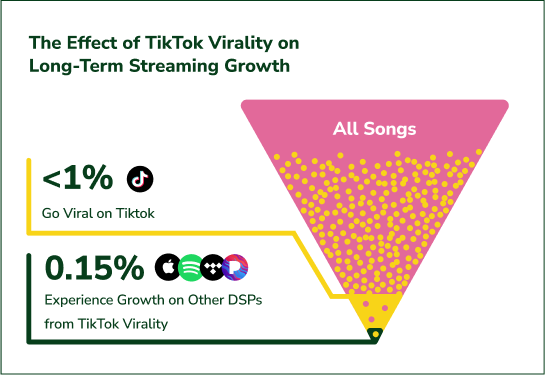
That statistic highlights one of the platform’s biggest realities: attention moves quickly.
A song may dominate timelines for a week and disappear shortly after if the artist cannot convert casual listeners into long-term fans. This is why many industry professionals now view TikTok as a launchpad rather than a complete career strategy.
The artists who benefit most from virality are usually the ones who already understand branding, audience engagement, and consistency beyond the app itself. Viral momentum may create visibility, but sustained careers are still built through strong catalogs, touring, fan communities, and strategic releases.
TikTok Virality Is a Launchpad, Not a Career Plan
At the same time, TikTok’s influence on music culture remains undeniable. The platform has reshaped how songs are marketed, how artists break into mainstream audiences, and even how labels evaluate commercial potential. Genres from Afrobeats to Latin music and Gospel have all experienced breakout moments through the app.
But in 2026, one thing has become increasingly clear: a viral TikTok song is not the finish line.
It is simply the beginning of what an artist chooses to build next.


