
Just one day after its release, Asake’s fourth studio album M$NEY is already doing what his projects have come to do best: dominate.
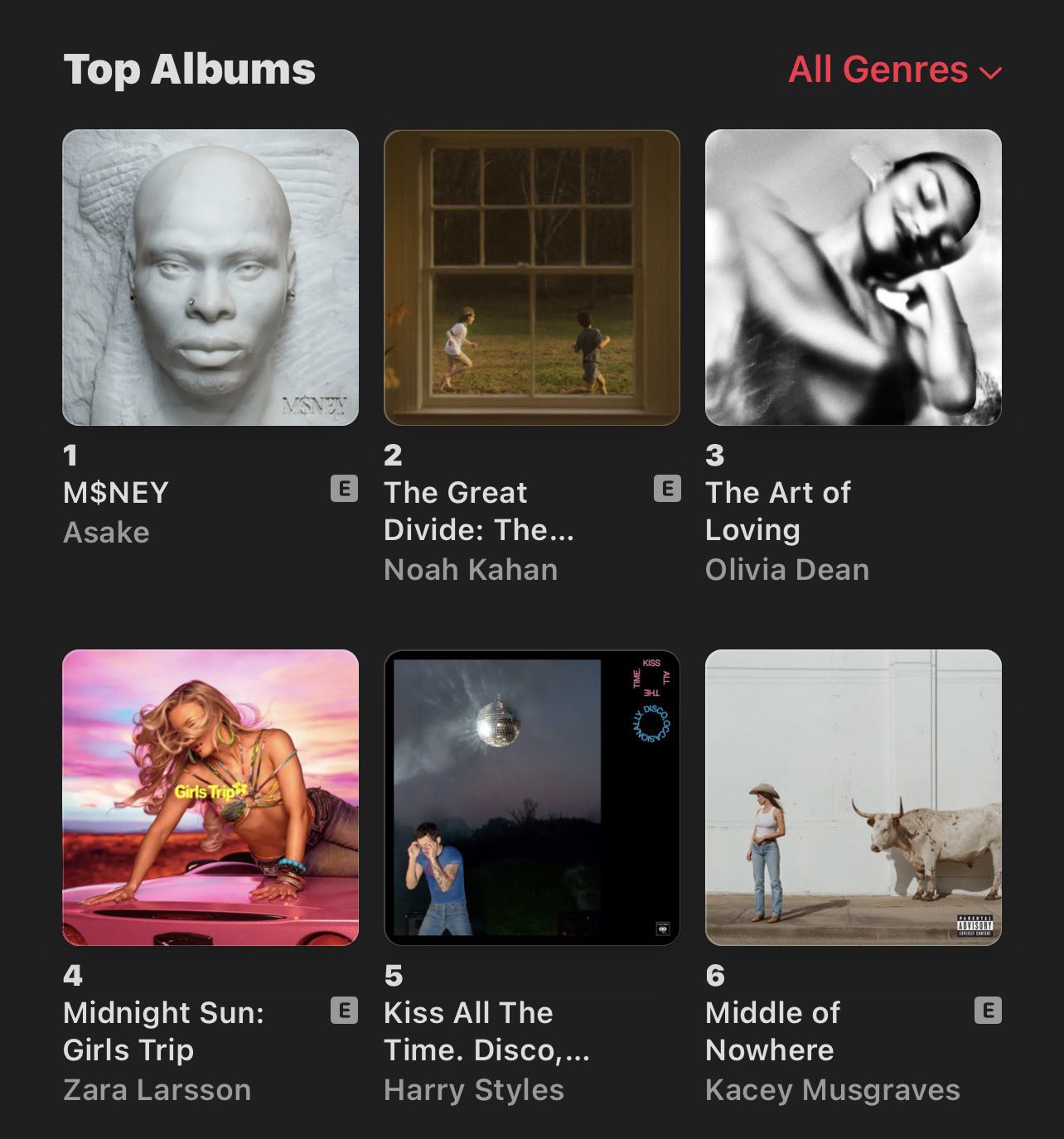
Released on May 1, 2026, the M$NEY album wasted no time asserting its presence across major platforms. Within 24 hours, the Asake M$NEY album reportedly crossed 100 million streams on Spotify, a staggering opening that reinforces his position as one of the most commercially reliable acts out of Nigeria. On Apple Music, the impact was even more immediate, every one of the album’s 13 tracks occupied spots within Nigeria’s Top 20, while the project itself surged to No. 1 not just locally, but also in Ghana, Cameroon, and the UK.
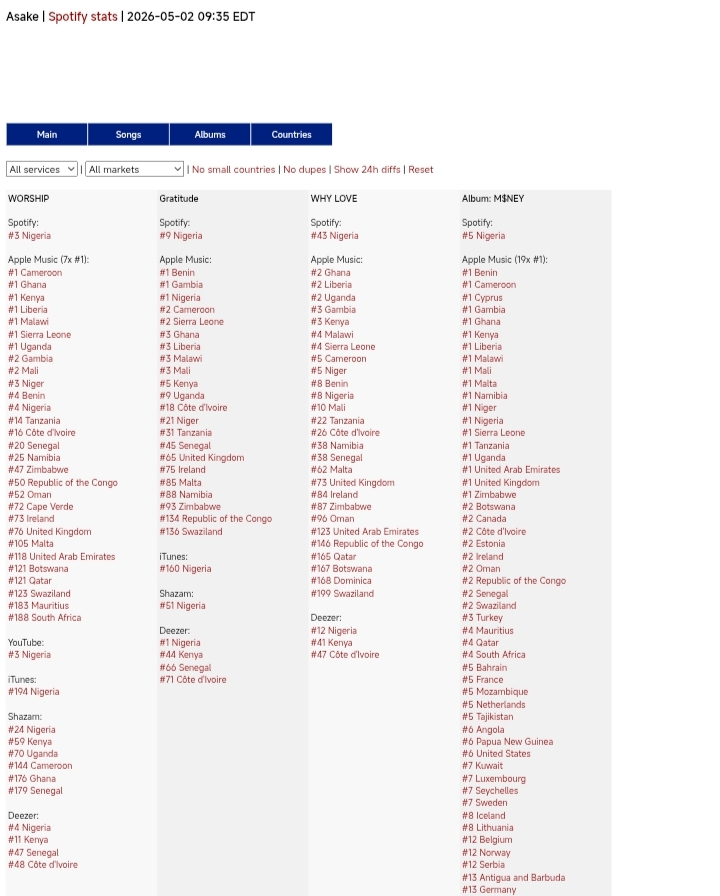
That UK No. 1 adds another layer to an already historic run. With M$NEY, Asake now becomes the first African artist to land five No. 1 projects on the UK Apple Music Top Albums chart, extending a streak that includes Mr. Money With The Vibe, Work of Art, Lungu Boy, and REAL, Vol. 1 with Wizkid. He also set a new benchmark as the first Afrobeats artist to score two No. 1 albums in the region within a single calendar year.
On paper, it’s another flawless victory for the Asake M$NEY album.
But M$NEY is not being received in the same way as his earlier work, and that’s where the conversation begins to shift.
Early reactions to the Asake M$NEY album have been mixed, with some listeners pointing to its more “spiritual” and layered production as a departure from the high-energy, street-rooted sound that defined his breakout era. It’s a noticeable pivot. Where past projects leaned heavily on bounce and immediacy, M$NEY appears more textured, more experimental, and at times, less instantly accessible.
And yet, the numbers tell a different story.
Despite the debates around the M$NEY album, its performance suggests that his audience is not only still present, but willing to follow him into new sonic territory. That willingness speaks to a deeper kind of artist-listener relationship, one built not just on hits, but on trust.
It also reinforces the scale of his influence, especially at a time when Asake is operating independently under his own imprint, Giran Republic, following his exit from YBNL. In an industry where label backing is often tied to global reach, the continued success of the M$NEY album signals a shift in what independence can look like for African artists on the world stage.

The collaborations on M$NEY, featuring DJ Snake, Tiakola, and Kabza De Small, further underline that global positioning. It’s not just about local impact anymore; it’s about staying present across multiple markets at once.
In that sense, the Asake M$NEY album represents more than just another successful release. It captures an artist in transition, balancing experimentation with expectation, and evolution with dominance.
The album feels less like a continuation and more like a recalibration. It reflects an artist testing the elasticity of his sound, seeing how far he can stretch it without losing the core audience that got him here.
The reactions may be split, but the outcome is already clear: Asake is no longer just operating from instinct or momentum. With M$NEY, he’s making deliberate choices about where his music goes next, and trusting that his audience will meet him there.


