
Five years ago, streaming was still a growing habit across much of Africa. Today, it is the backbone of music discovery, global export, and fan culture. As Spotify marks its fifth anniversary in Nigeria, Ghana, and Kenya, having launched simultaneously on February 23, 2021, the platform is spotlighting how African listeners and artists have reshaped the global music economy in just half a decade.
From record-breaking Afrobeats streams to the rise of hyperlocal genres and millions of fan-curated playlists, Spotify’s five-year journey in these markets reflects more than growth. It reflects ownership.
Five Years, Three Markets, One Cultural Shift
Since launch, Spotify has evolved from a new entrant into a major engine for African music circulation. In Nigeria alone, listeners have logged over 1.4 billion listening hours, while Afrobeats streams in the country have surged by more than 5,000% between 2021 and 2025. Similar patterns of growth have unfolded in Ghana and Kenya, where local sounds increasingly travel across borders before breaking globally.
That “sideways” movement, African music first circulating within the continent has become one of Spotify’s most defining African trends.
Most-Streamed Artists of the Five-Year Era
As part of the anniversary, Spotify revealed the artists who have dominated streams in each market since 2021, names that now define Africa’s modern soundscape.
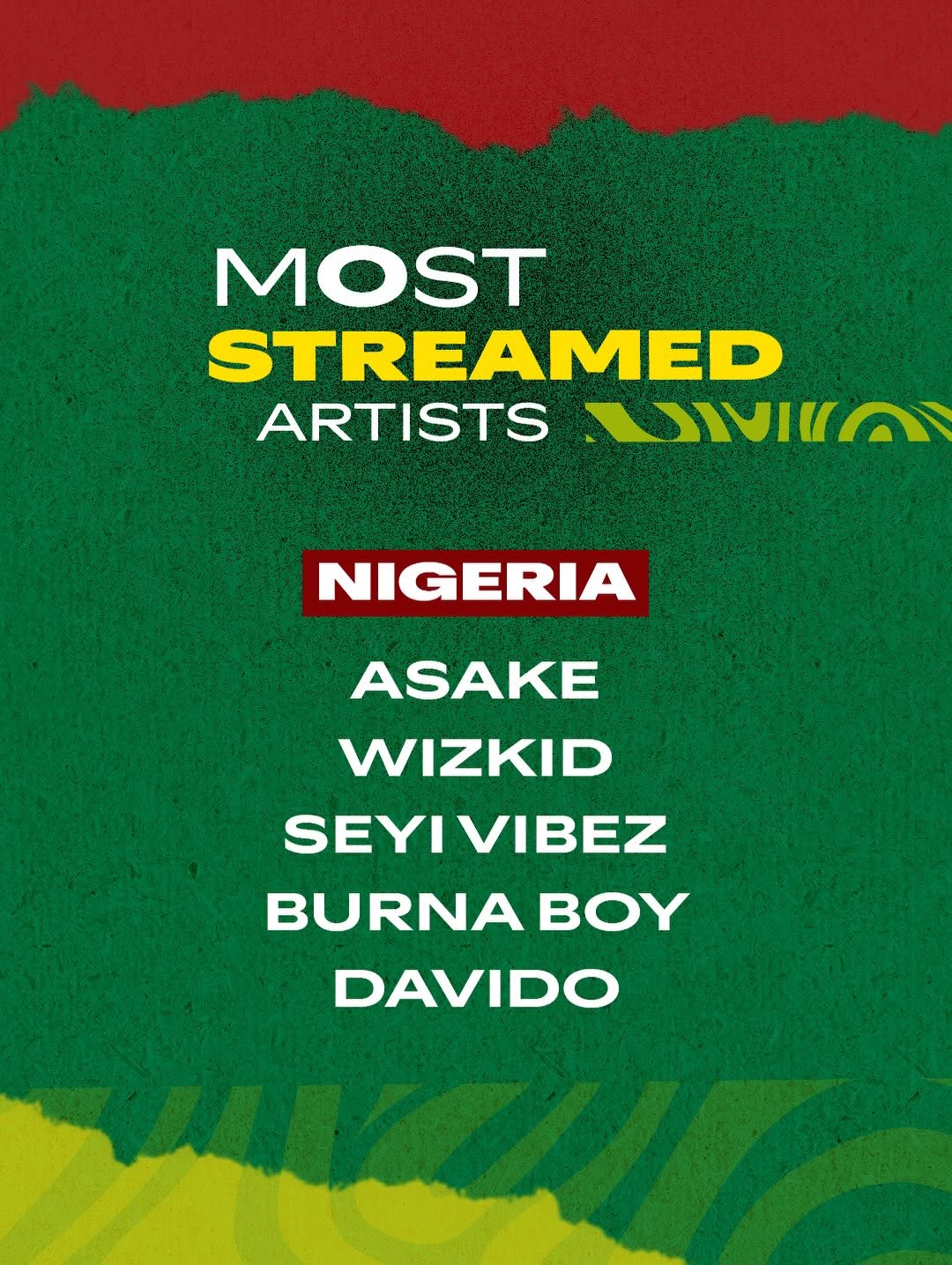
We have Asake, Wizkid, Seyi Vibez, Burna Boy and Davido for Most streamed artists in Nigeria.
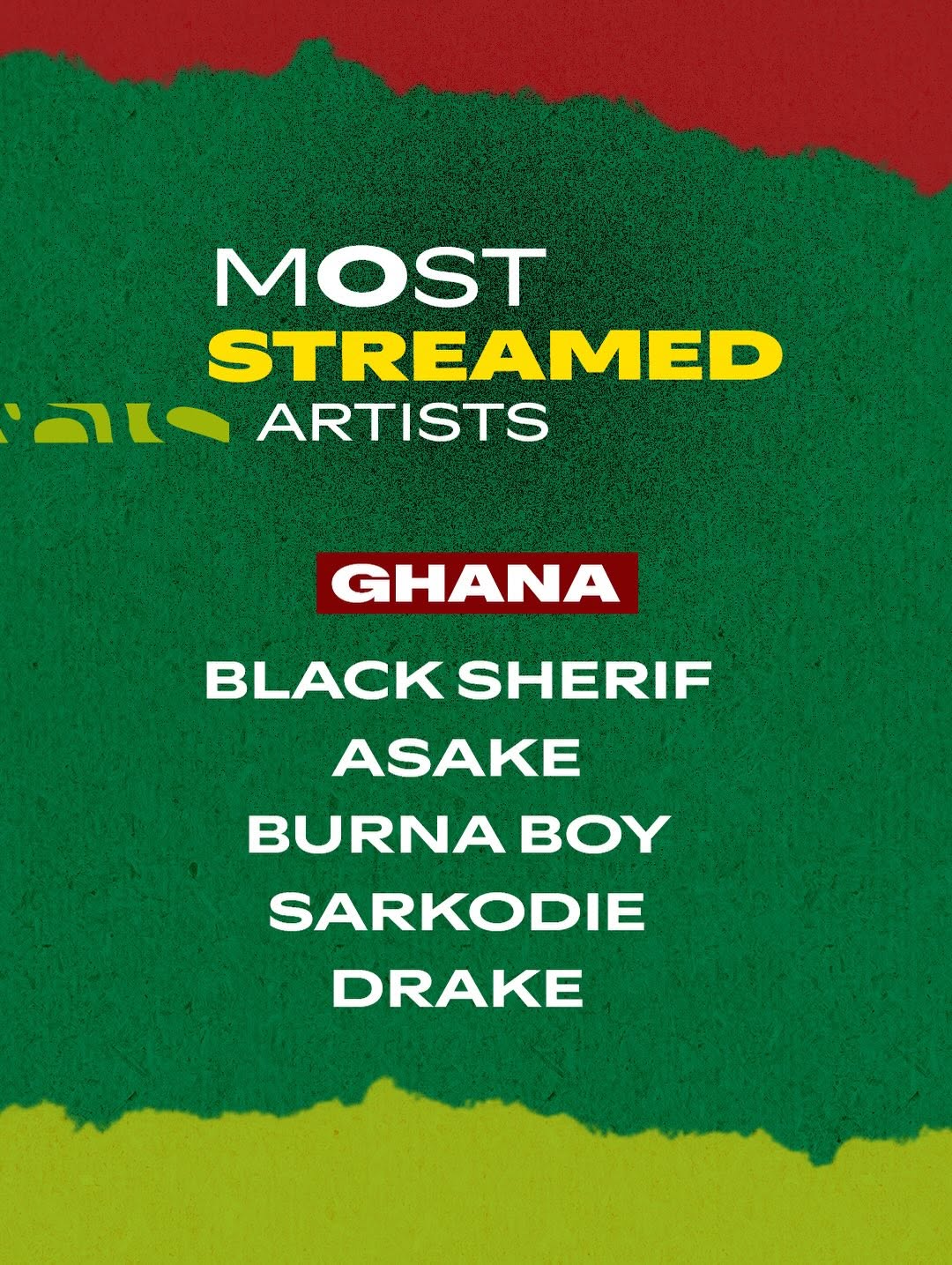
We have Black Sherif, Asake, Burna Boy, Sarkodie and Drake for Most streamed artists in Ghana
We have Drake, Chris Brown, Future, Burna Boy and Travis Scott for Most streamed artists in Kenya
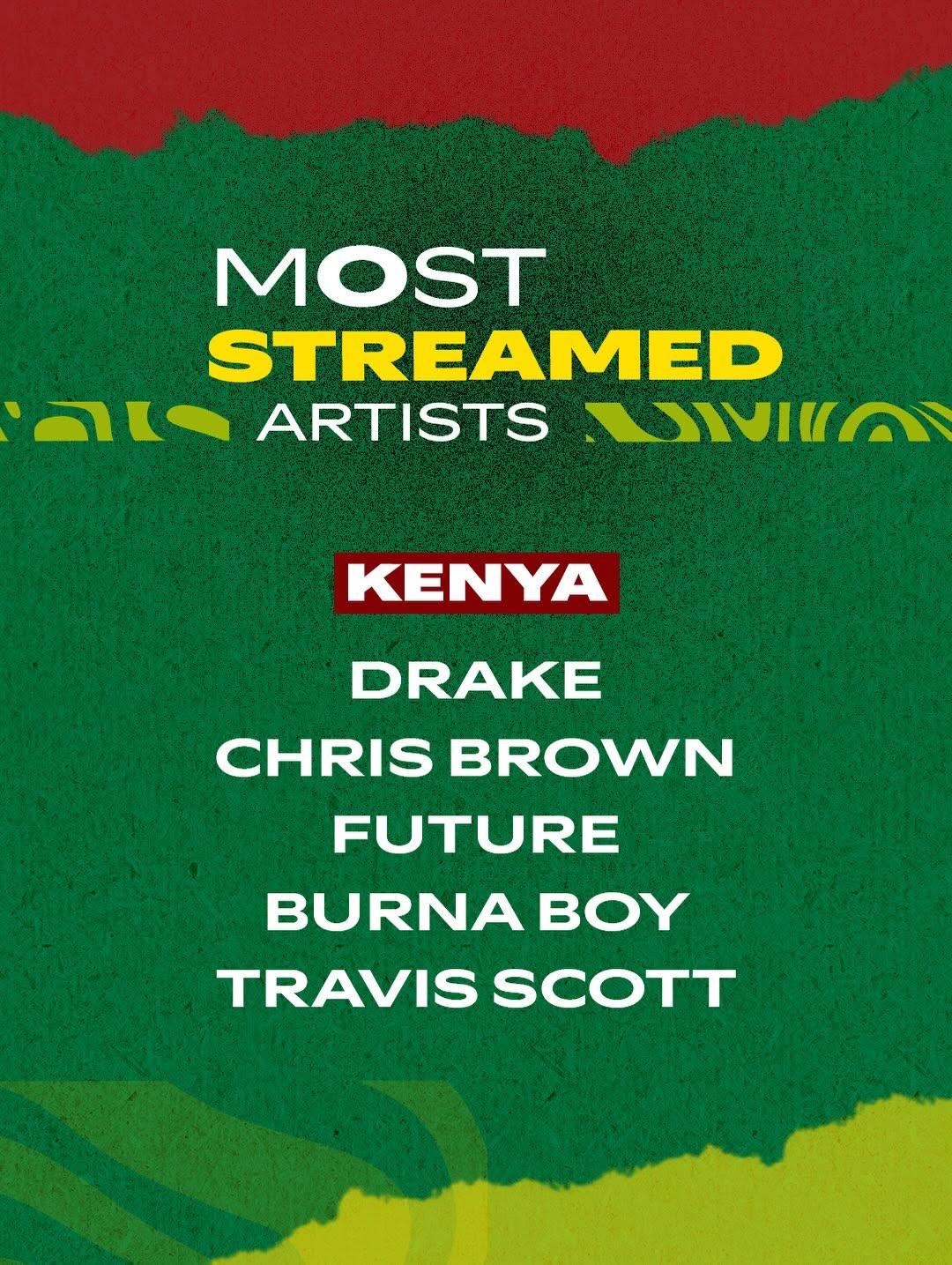
These rankings highlight a shift toward sustained local dominance rather than one-off global moments.
The Songs That Soundtracked Five Years
Some records didn’t just top charts, they defined eras.
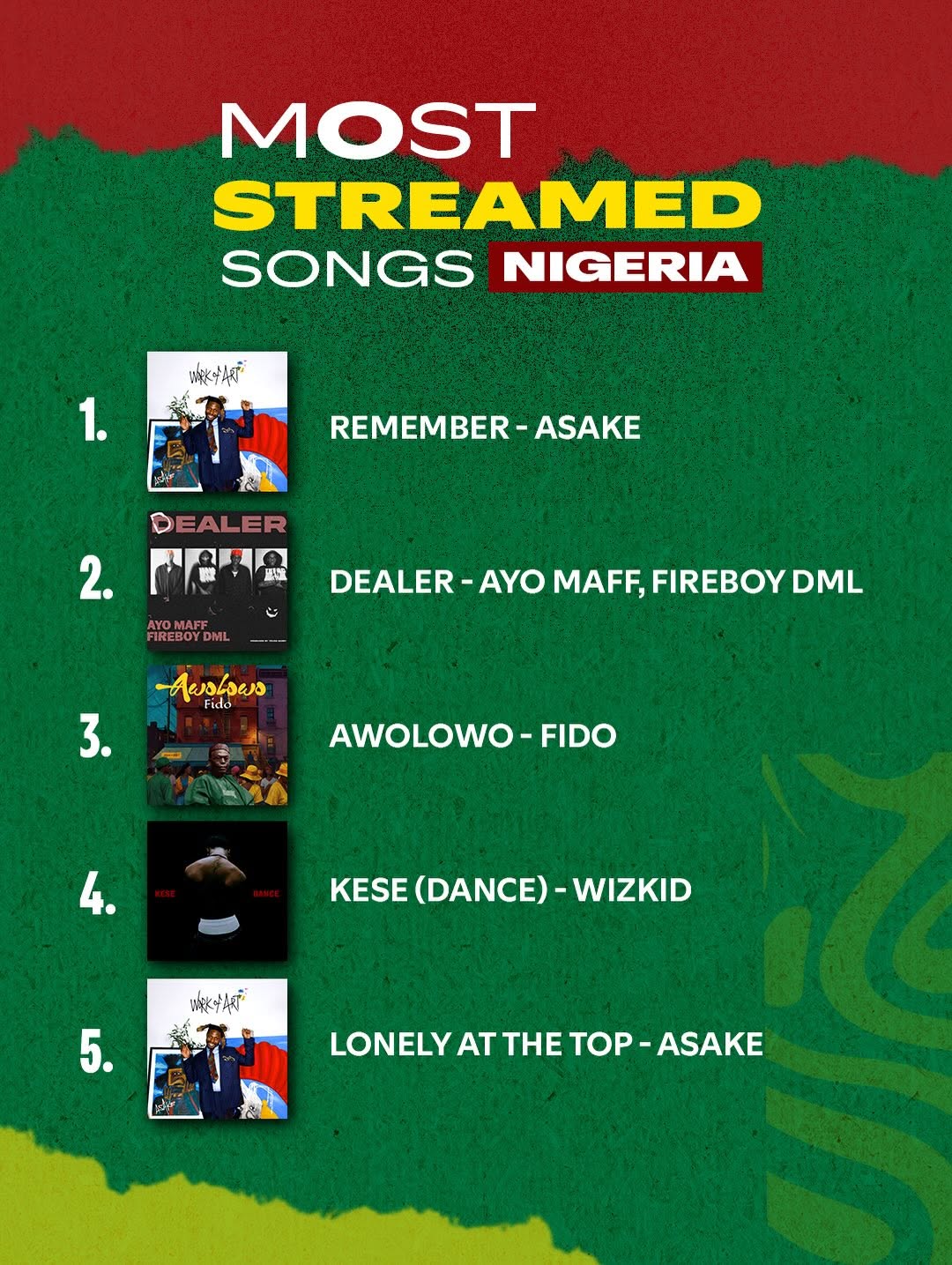
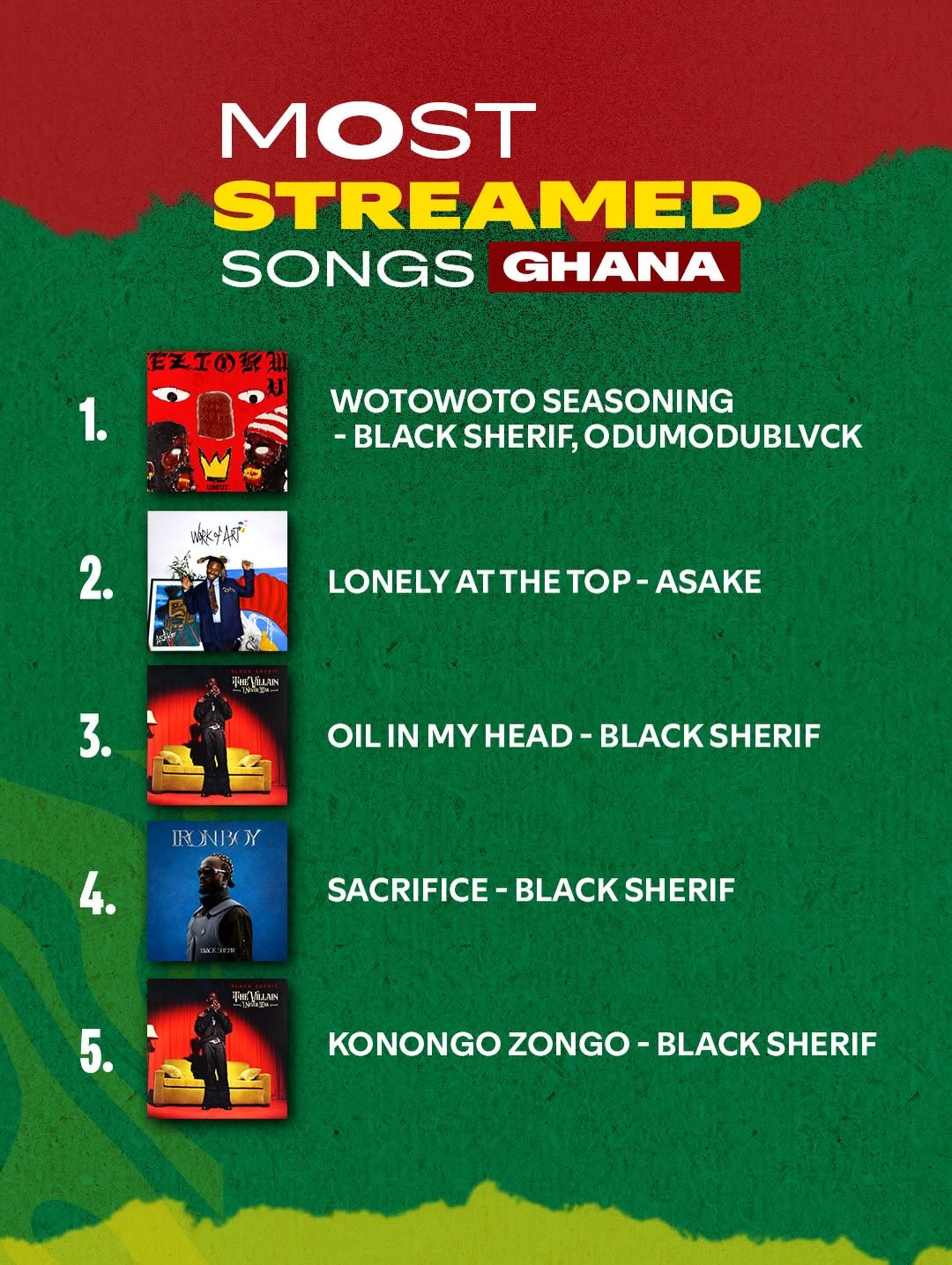
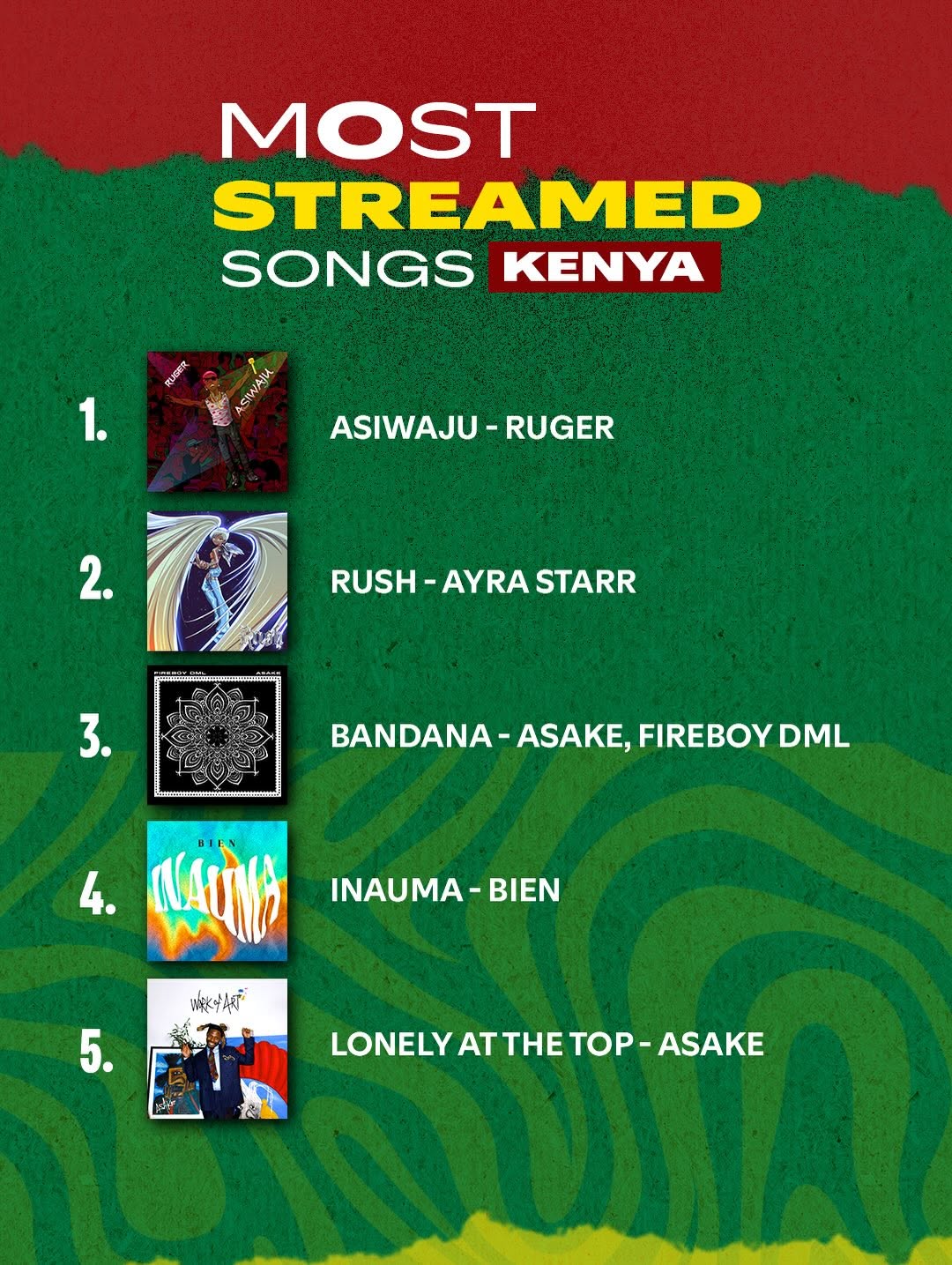
Nigeria: Remember – Asake
Ghana: Wotowoto seasoning
– Black sherif, OdumoduBlvck
Kenya: Asiwaju – Ruger
Each track crossed borders organically, reinforcing Spotify’s role as a launchpad rather than just a scoreboard.
Fans Took Control: User-Generated Playlists
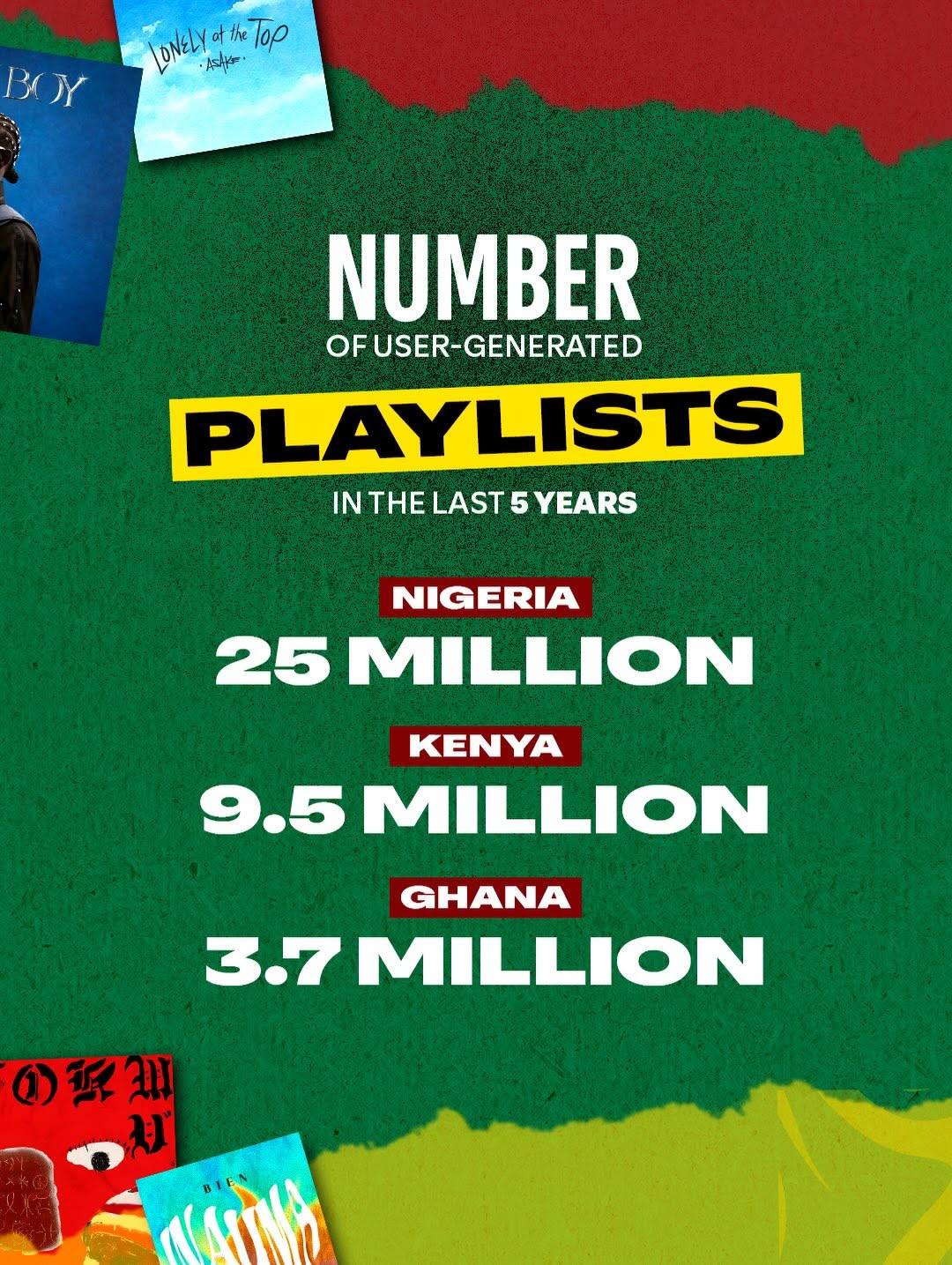
Perhaps the clearest sign of Spotify’s cultural impact is how listeners themselves curate music.
Over the last five years:
Nigeria: 25 million user-generated playlists
Kenya: 9.5 million playlists
Ghana: 3.7 million playlists
From heartbreak moods to party rotations, discovery has shifted from radio gatekeepers to everyday listeners.
Money, Momentum, and the Creator Economy
Spotify’s economic footprint has grown just as dramatically. In 2024 alone, Nigerian artists earned over ₦58 billion ($38 million) in royalties from the platform, more than double the previous year. The number of Nigerian artists earning at least ₦10 million annually has tripled since 2022, while over 80% of streams for top African acts now come from outside their home countries.
Initiatives like RADAR Africa and Spotify for Artists have helped emerging talents such as Fido, Mavo, and Siicie convert local buzz into global visibility.
Five Years In, the Story Is Clear
Spotify’s fifth anniversary in Nigeria, Ghana, and Kenya isn’t just about numbers, it’s about how African audiences reshaped streaming itself. In five years, listeners became curators, local hits became global exports, and African music moved from the margins to the center of the world’s playlists.
And if the last five years proved anything, it’s that Africa isn’t catching up to global music culture, it’s actively leading it.


